Article: What Are the Bees Doing in the Fall?
What Are the Bees Doing in the Fall?
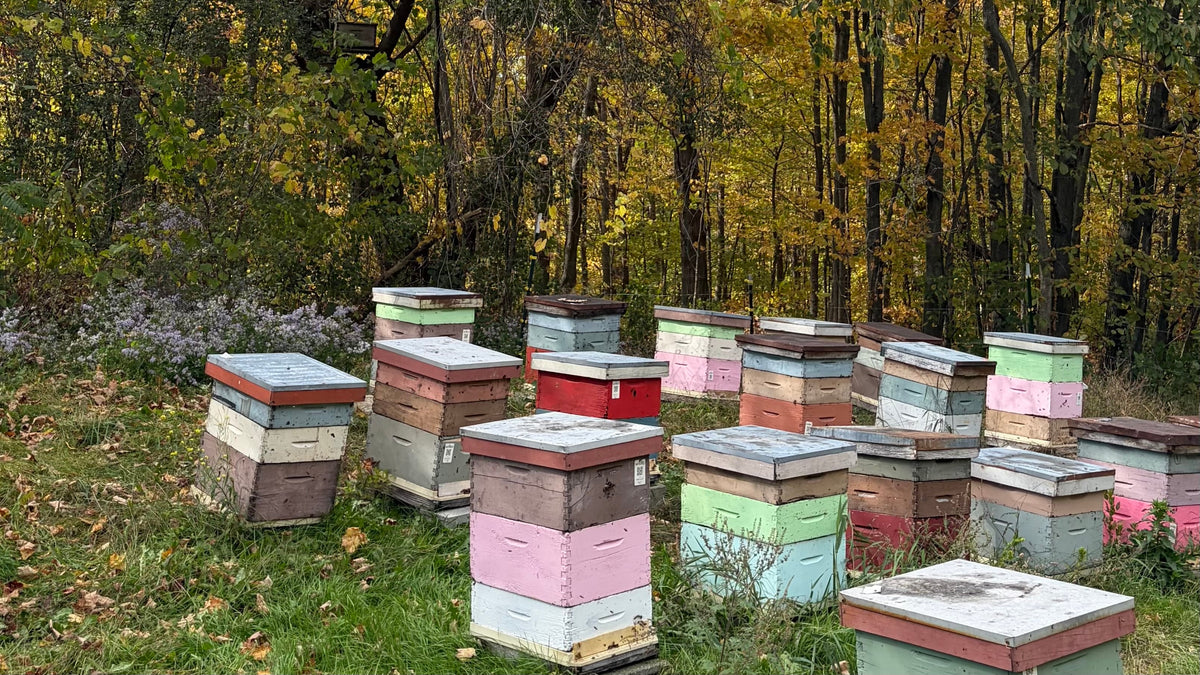
Fall is a quieter season in the beeyard, but it's an important one. The bees are getting ready for winter, and so are we. Here's what's going on inside the hive this time of year, and what we look for as beekeepers.
The colony slows down
As the days get shorter and cooler, the hive winds down. The bees are still bringing in nectar from goldenrod, asters, and whatever other flowers they can find, but the busy rush of summer is over. The queen slows her egg laying, and the bees turn their attention to storing honey for the long, cold months ahead.

What we look for
When we check the hives in fall, two things matter most:
- Enough bees. A strong population helps the colony regulate its temperature through winter.
- Enough honey. Honey is the bees' food supply until spring, so they need plenty stored away.
Winter bees are different
Bees raised in fall are not the same as the bees you see in July. Summer bees work hard and typically live only a few weeks. Winter bees can live up to five months, and they are the ones that keep the hive warm all winter long by clustering together and generating heat.
Watch Curtis explain it
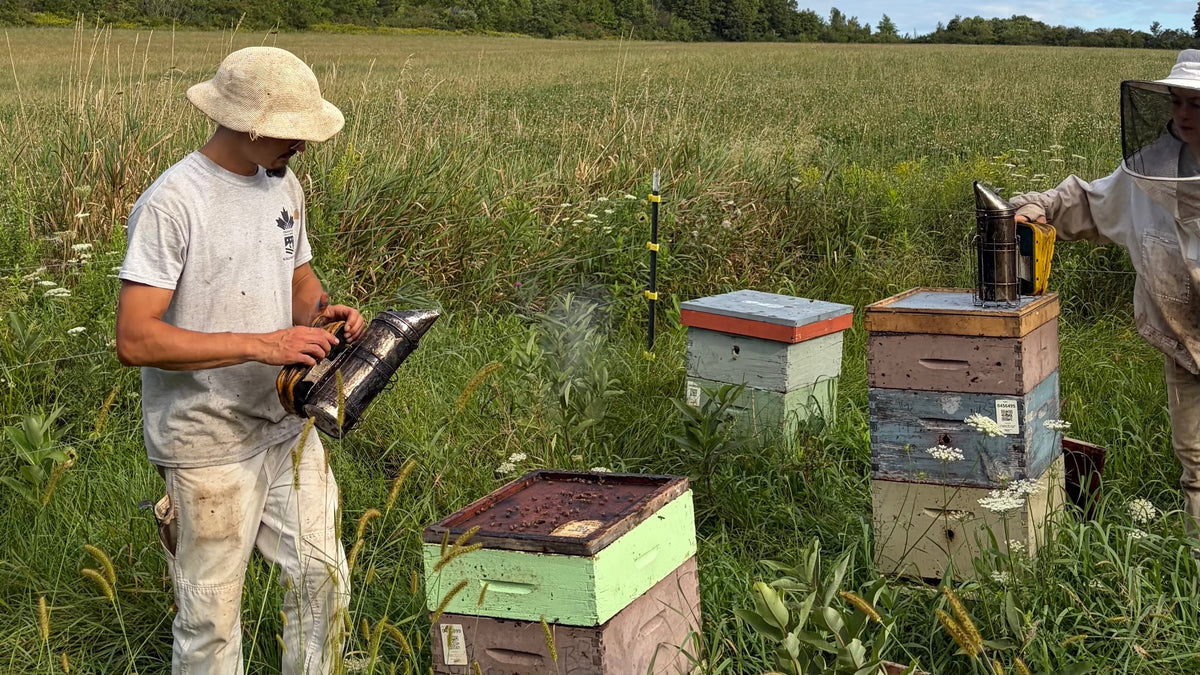
Want to see it in the yard? Curtis walks through all of this in a short video, and he checks a hive to see if it's ready for winter.

Buttoning up for the season
When a hive has plenty of bees and plenty of honey, we close it up and let the bees get back to work for the rest of the fall. From there, they take care of each other until spring.
If you'd like to bring a little Vermont home, our raw and liquid honey is always available at champlainvalleyhoney.com.
Have a question about bees? Send us a note, we love talking bees.