
Article: A Beekeeper's Tools, Explained
A Beekeeper's Tools, Explained
Open a beehive for the first time and you'll quickly notice how much of the work depends on a handful of simple tools. None of them are fancy, and most have been used in beeyards for generations. Here's what we reach for, and why.
The smoker
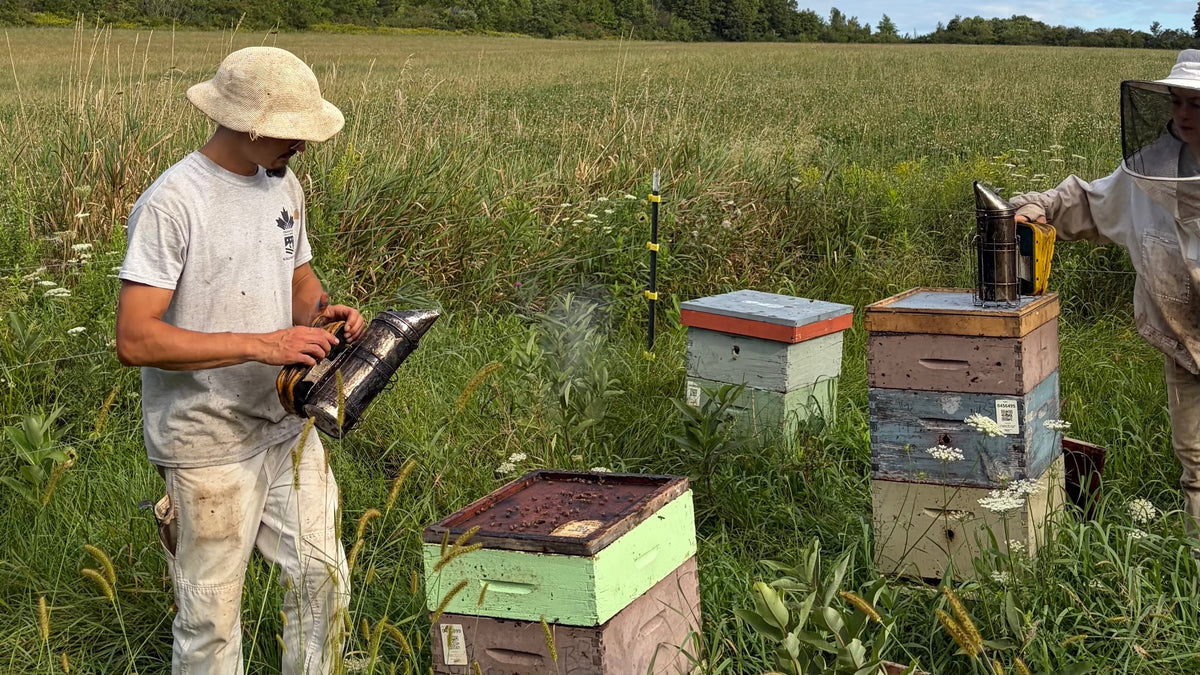
If you picture one beekeeping tool, it's probably this one. A smoker is a small metal canister with bellows, and it burns fuel like burlap, pine needles, or wood shavings to make cool, steady smoke. A few gentle puffs at the hive entrance and over the frames help keep the colony calm while we work. Smoke interferes with the bees' alarm signals, which makes them less likely to react defensively. The key word is cool. Hot smoke bothers the bees, so a good smoker is all about slow, even burning.

The hive tool
Bees seal up their home with propolis, a sticky resin they gather from trees and plants. Over a season, the boxes and frames get glued together firmly. A hive tool is a flat steel bar that lets us pry boxes apart, loosen frames, and scrape away excess wax and propolis. Ours rarely leave our hands while we're in the yard.

The veil and bee suit
Protective gear starts with the face. A veil keeps bees away from our eyes, nose, and mouth, which is where nobody wants a sting. Many beekeepers also wear a full suit or jacket in light colors, since bees tend to be calmer around them. Even with all that, a sting here and there is part of the job.
Gloves
Gloves are a personal choice. Some beekeepers like the extra protection, while others prefer bare or lightly covered hands because it gives them a better feel for handling frames gently. Gentle handling matters a lot, since quick or clumsy movements make bees more defensive.

Frames and supers
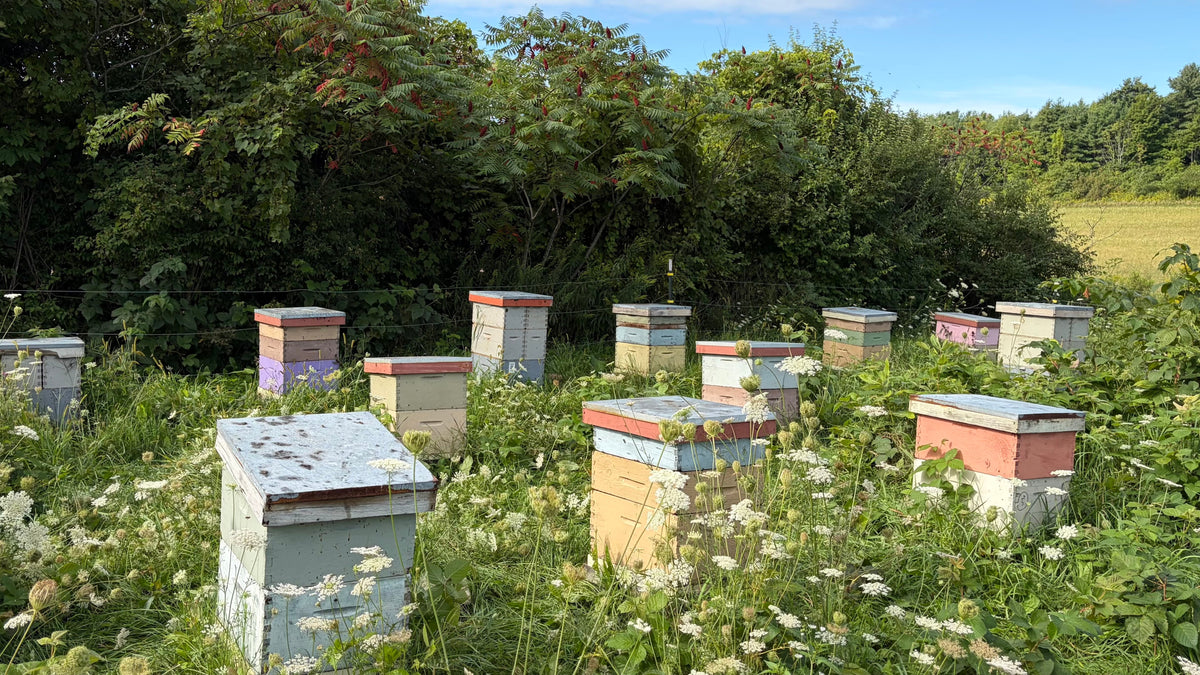
These aren't tools exactly, but they're the heart of the setup. Frames hold the wax comb where bees raise young and store honey. Supers are the boxes stacked on top of the hive, giving bees extra room to fill with honey. Because frames are removable, we can inspect the colony and harvest honey without tearing apart their home.

The uncapping knife and honey extractor
When it's time to harvest, bees have sealed their ripe honey in the comb with thin wax caps. An uncapping knife or fork removes those caps. Then the frames go into an extractor, which spins them so the honey is flung out and collected. The empty comb stays intact, so the bees can refill it.

It all comes back to the bees
Every tool on this list has the same job: let us work with the colony while stressing them as little as possible. Good beekeeping is mostly patience, attention, and knowing how bees behave, and the equipment just helps us do that well.
If you'd like to bring a little Vermont home, our raw and liquid honey is always available at champlainvalleyhoney.com.