How is Honey Made?
We often have customers ask us at the honey shop, how is honey actually made? What goes into the process in the bee hive? Bees make honey by a fascinating and complicated process.
Step 1: Collect nectar
First, forager bees leave the hive to search for nectar in flowers and blossoming plants. A single forager will visit between 50 and 100 flowers on each trip, drawing up nectar with her long tongue and storing it in a special second stomach called the honey stomach (separate from her digestive stomach) which can hold almost 40mg of nectar.

Step 2: Pass it along
Back at the hive, the forager passes the nectar to a house bee through a process called trophallaxis- mouth to mouth, over and over between multiple bees. With each transfer, the bees add enzymes from their saliva, most importantly invertase, which begins breaking down the complex sugars in nectar into simpler ones: glucose and fructose.

Step 3: Evaporate the water
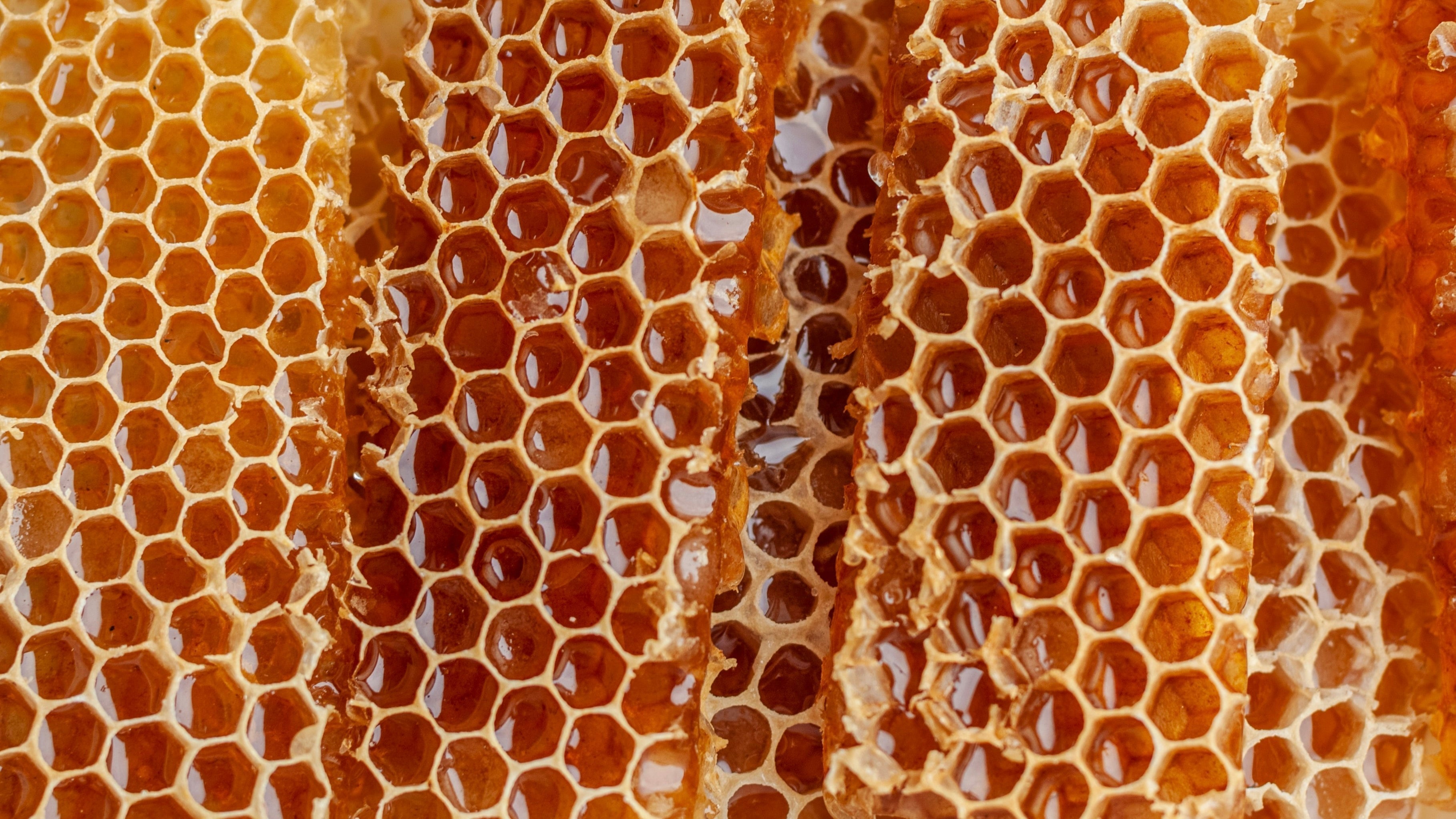
The bees deposit the enzyme-rich nectar into open honeycomb cells. Then hundreds of bees fan it vigorously with their wings, circulating warm air through the hive to evaporate the water content. Fresh nectar is about 70–80% water. Ripe honey is reduced down to around 17–20% water, which is low enough that bacteria and mold cannot survive in it, giving honey its legendary shelf life.

Step 4: Seal the cell
Once the honey has reached the right moisture level, the bees cap the cell with a thin layer of beeswax, sealing it for long-term storage. The hive uses this honey as its food source through winter when flowers aren't blooming. A single colony needs roughly 60lbs of honey to survive a cold season.

Step 5: The harvest
When the beekeeper harvests, the wax caps are gently removed and the frames are spun in an extractor, using centrifugal force to pull the honey out without destroying the comb. Raw honey is then strained to remove wax and debris, but never heated- preserving all the enzymes, pollen, and antioxidants that make raw honey so special.