The CRP Rollercoaster: Uncertainties in Conservation
In the midst of a tense government shutdown, one piece of sunlight broke through for conservation: Congress passed a measure extending key Farm Bill programs, including the Conservation Reserve Program (CRP). While this isn’t a full farm bill reauthorization, the extension is a real win — especially for pollinators. But even with this progress, large gaps remain, and more work is desperately needed.
What is the CRP? 🤔
The Conservation Reserve Program (CRP) is a voluntary federal program that helps farmers and landowners protect environmentally sensitive land by taking it out of agricultural production and planting it with long-term, conservation-focused cover such as native grasses, wildflowers, or trees. In return, participants receive annual rental payments and cost-share support for establishing the habitat. By reducing erosion, improving water quality, restoring wildlife habitat, and increasing biodiversity, CRP has become one of the most impactful conservation tools in American agriculture.

What Happened: CRP Gets a Short-Term Extension Amid Shutdown 🌱
The Conservation Reserve Program is navigating a difficult political climate marked by budget uncertainty, competing agricultural priorities, and stalled Farm Bill negotiations. Because CRP is funded and authorized through the Farm Bill, any delay or dysfunction in Congress leaves the program vulnerable.
In early November 2025, the Senate approved legislation to extend farm programs that were at risk, including CRP. This move came just in time: as of October 1, CRP authority had lapsed under the expiring 2018 Farm Bill.
However, it’s not all smooth sailing. Also beginning on October 1, 2025, FSA is not accepting new offers or re-enrollments for CRP contracts, and work to process new offers or conduct site visits has halted.
In short, the extension keeps existing contracts alive and pays out as promised, but does not fully renew the program’s long-term authority.

Why This Matters for Pollinators🐝
CRP has long been a conservation backbone, not just for soil and water, but for wildlife — including pollinators. Here’s how this extension helps them:
-
Habitat Preservation
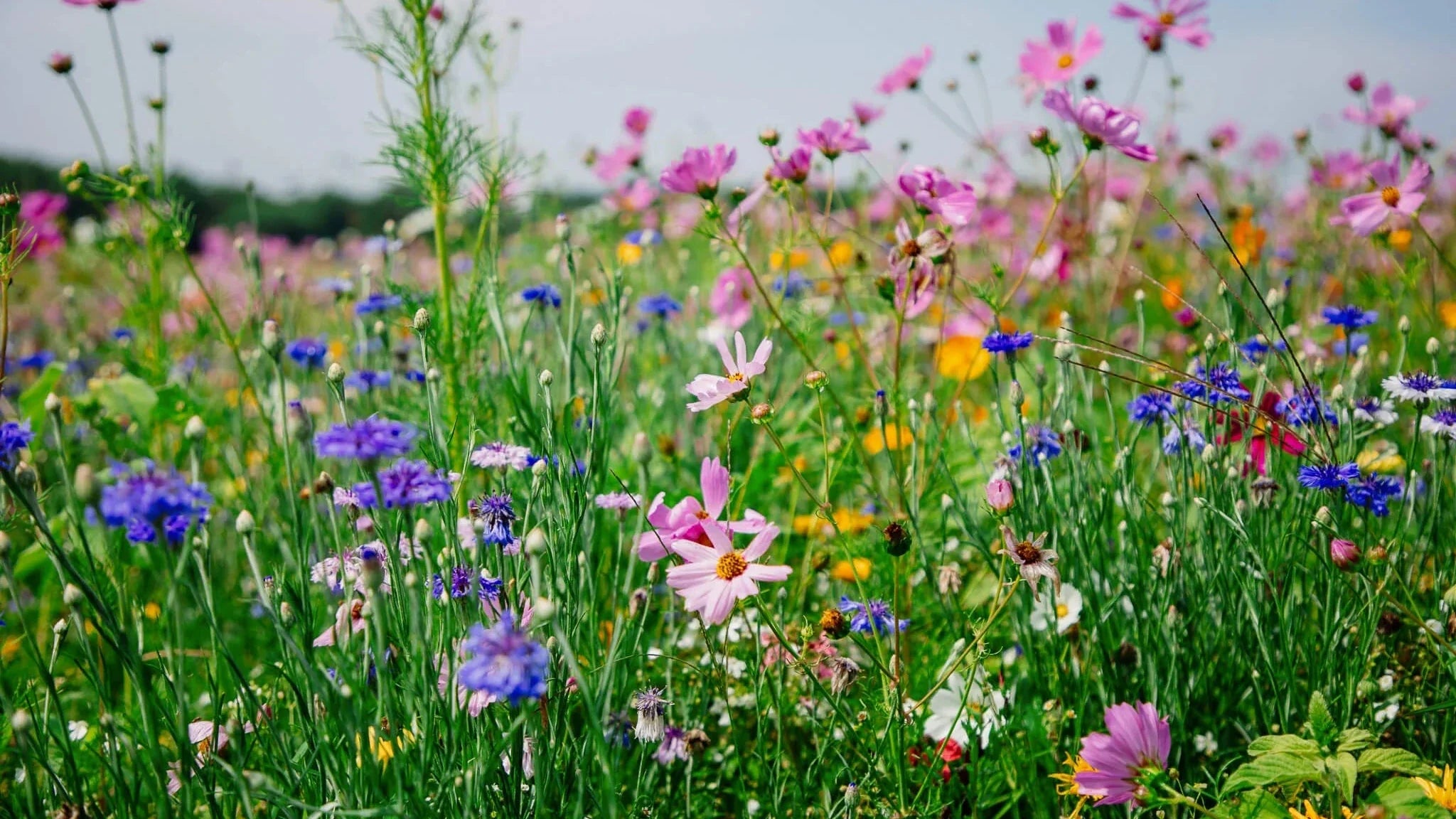
Under CRP, environmentally sensitive farmland can be taken out of production and planted with vegetative cover — grasses, wildflowers, shrubs — that supports pollinators. This reduces habitat fragmentation and gives pollinators places to feed, nest, and thrive. -
Specialized Pollinator Practices
The CRP includes a dedicated “Pollinator Habitat” practice (CP-42), which encourages landowners to establish seed mixes that bloom throughout the season, providing nectar and pollen for a variety of pollinating species. Under this practice, landowners receive financial support: 10-year rental payments, cost-share for establishing native or pollinator-friendly plants, and incentive payments. -
Food System Resilience
Pollinators are not just “nice to have” — they underpin much of our food system. Many crops (nuts, fruits, vegetables) depend on insect pollination. By supporting pollinator populations, CRP contributes to both ecosystem health and agricultural stability.

But — There’s a Big “However”
While the extension is valuable, it’s far from a silver bullet. One of the most pressing challenges for CRP right now is its extremely limited time frame, which leaves the entire program vulnerable as the 2018 Farm Bill hangs in limbo. The recent extension keeps CRP temporarily afloat, but it does nothing to resolve the fact that the program’s long-term authority expired with the old farm bill.
Without a full reauthorization, CRP can’t reliably accept new contracts, expand pollinator initiatives, or provide the stability landowners need to commit acreage for a decade or more. Conservation programs require long-term certainty, but Congress is only offering short-term patches, creating a scenario where CRP’s future could be scaled back, reshaped, or even defunded depending on political negotiations. This instability not only puts millions of acres of conservation land at risk — it also undermines the trust and predictability that make CRP effective in the first place.

Conclusion 🌻
The recent extension of CRP is a welcome reprieve — a lifeline for pollinator habitat at a time of uncertainty. It’s a reminder that even in political turmoil, conservation can advance. But it’s also a warning: temporary fixes aren’t enough. To safeguard pollinators — and by extension, our food systems — we need sustained commitment, not just for a year, but for decades.