

What Is Festooning?
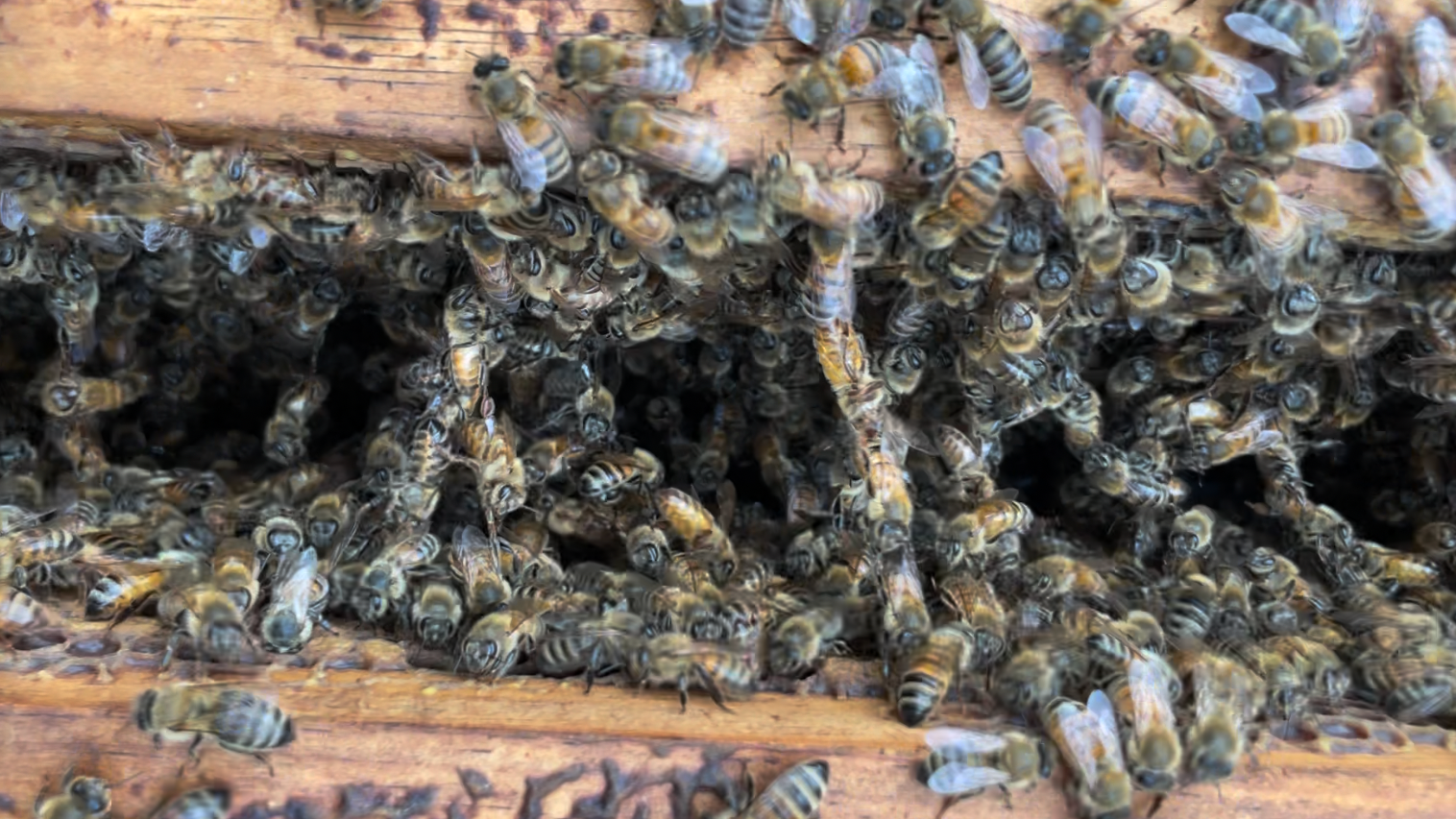
If you’ve ever opened a beehive and noticed bees hanging together in long chains, you may have witnessed a remarkable behavior known as festooning. Festooning plays a role in how bees build comb, organize space in the hive, and coordinate their work together!
What Is Festooning?
Festooning occurs when honeybees link their legs together to form living chains or curtains of bees. These chains can stretch between frames or hang in clusters inside the hive. The bees attach to one another using their legs, creating flexible structures made entirely of living insects.
Rather than being random, these chains are carefully positioned and often appear in areas where new comb is being built or where the colony is expanding its internal structure.

Why Bees Form Chains
Researchers and beekeepers believe festooning serves several purposes inside the hive.
One key role is helping bees measure and organize space when building honeycomb. Honeycomb requires extremely precise spacing, and festooning bees may act like a living framework that guides where wax should be built. By hanging in chains, they create a reference structure that helps worker bees maintain the correct distance between comb surfaces.
Another possible function is coordinating wax production. Bees that produce wax flakes often participate in festooning, and the behavior may help stimulate wax secretion or distribute wax among workers building new comb.

A Sign of Active Comb Building
Festooning is most commonly seen when bees are actively constructing new comb. This might happen when:
-
A colony is growing rapidly
-
A new hive or foundation has been added
-
Bees are drawing out fresh wax frames
-
A swarm is establishing a new home
During these times, large groups of workers collaborate closely, and festooning becomes part of the collective building process.
Next time you inspect a hive and notice bees linking together in delicate chains, take a moment to appreciate the behavior. You’re witnessing one of the many small wonders that make honeybees such extraordinary creatures!