Article: Prepping the Hives for Fall
Prepping the Hives for Fall
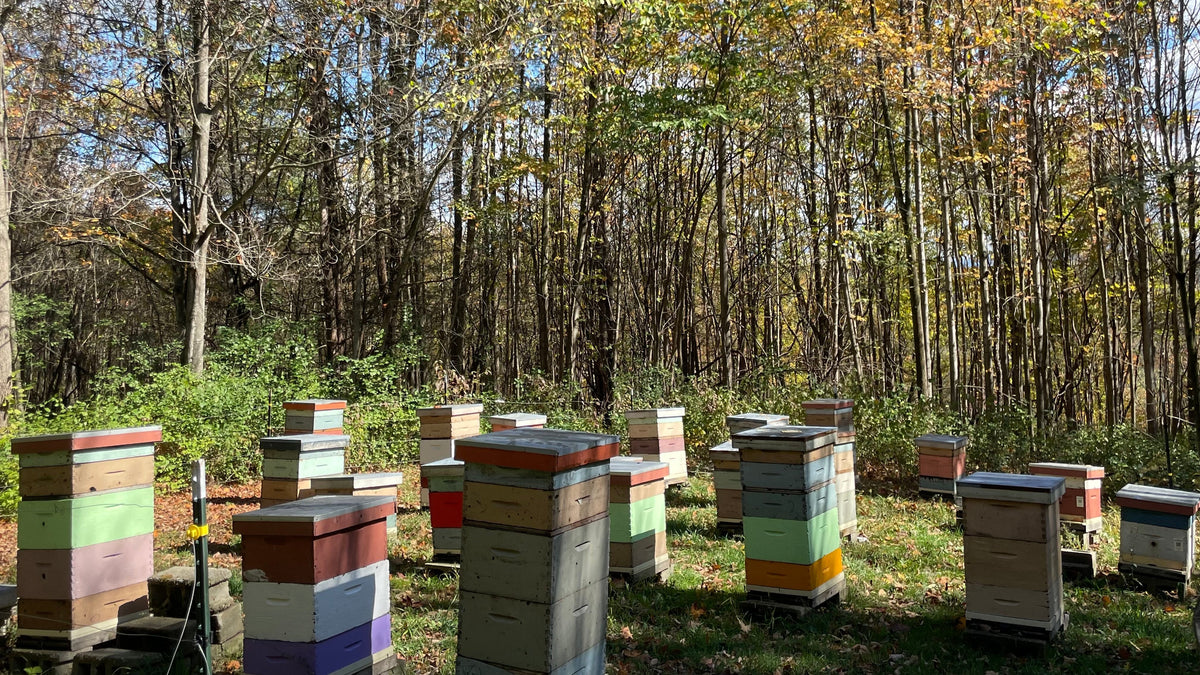
As the days grow shorter and the temperatures start to drop here in Vermont, our bees are hard at work getting ready for the months ahead. Fall is one of the most important times of year for a beekeeper, and the choices made now determine how well a colony survives the winter.
Slowing Down the Hive
By fall, the frantic pace of summer honey flow has come to an end. The queen begins laying fewer eggs, the colony's population starts to shrink, and the bees shift their focus from growth to survival. Male drones, who serve no purpose over winter, are often pushed out of the hive as the workers conserve resources for the colony that remains.
Making Sure There's Enough Honey Stored
One of the biggest fall tasks for a beekeeper is checking honey stores. Bees rely on their own honey to survive the winter, since there are no flowers left to forage from once the cold sets in. If a hive doesn't have enough stored honey, we may need to leave more of it behind at harvest time or provide supplemental feeding to make sure the colony has what it needs to make it through to spring.

Checking for Pests and Disease
Fall is also a critical window for pest management, especially when it comes to varroa mites. These pests can weaken a colony heading into winter, so we check hives closely and treat as needed before the cold arrives. A healthy, mite-free hive going into winter has a much better shot at coming out strong in the spring.
Reducing the Hive Entrance
As temperatures drop, we reduce the size of the hive entrance. A smaller opening helps the colony conserve heat and makes it easier for the bees to defend the hive against robbing from other colonies or pests looking for an easy meal during a season when resources are scarce.

Insulating for the Cold Ahead
Depending on the hive and the weather ahead, some additional insulation or windbreaks may be added to help the colony stay warm. Bees don't hibernate over winter. Instead, they cluster together in a tight ball, vibrating their flight muscles to generate heat and keep the queen and the center of the cluster warm.
Why This Season Matters
The work put into a hive in the fall has a direct impact on whether it survives the winter. It's a quieter time of year compared to the height of summer, but it's every bit as important. Every choice, from honey stores to pest treatment to insulation, sets the colony up for what's ahead.
As we prep our hives for the season, we're reminded of just how much goes into every jar of honey you find on the shelf, long before it ever reaches your table.