

Article: Meet the Hive: The Honey Bee Caste System
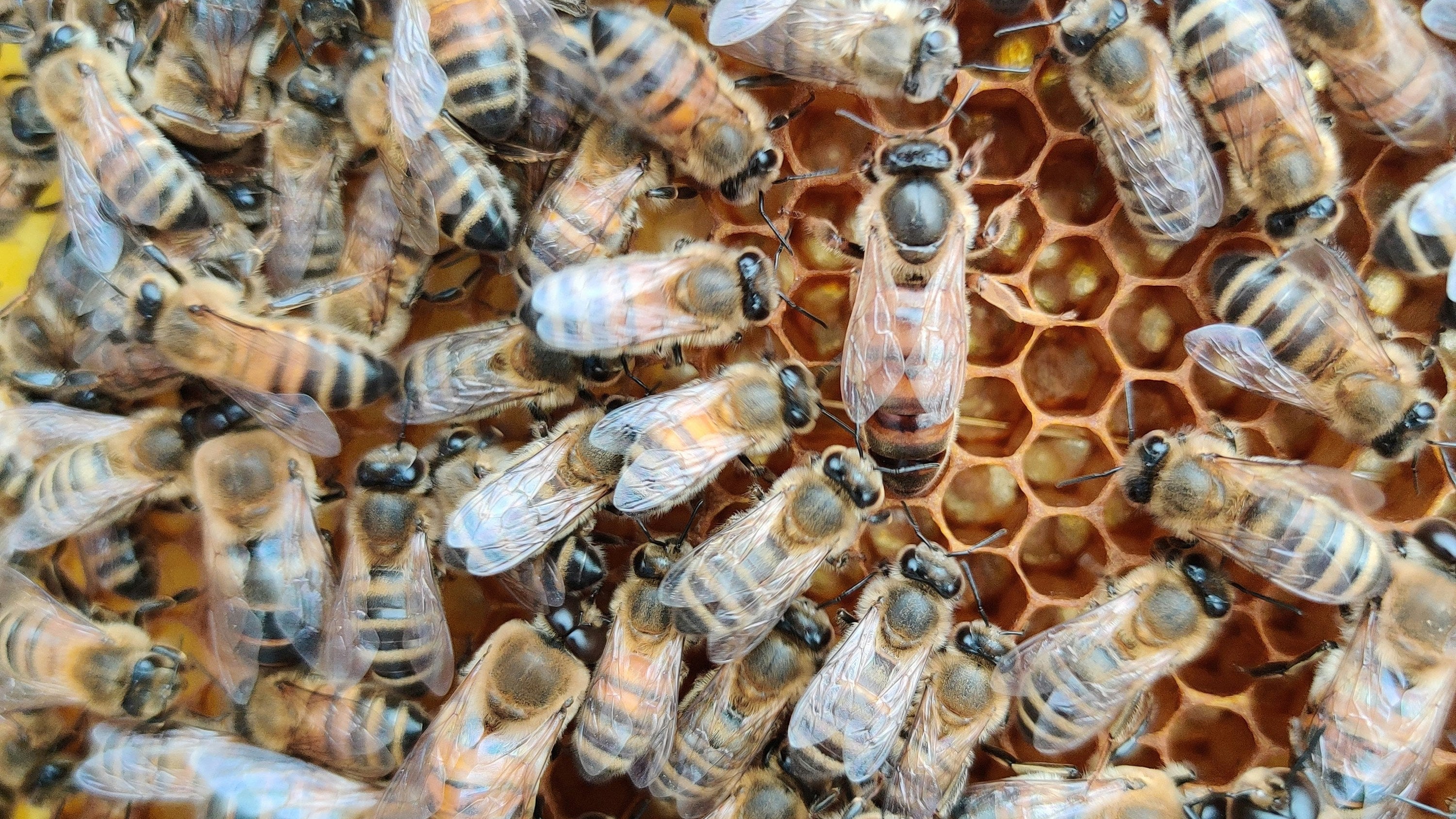
Meet the Hive: The Honey Bee Caste System
If you’ve ever watched bees coming and going from a hive, you may have wondered what is really happening inside. It can look like a lot of random buzzing, but life in a hive is highly organized, and every bee has a specific job. Let’s meet the three types of bees that share a colony and see how they work together.
The Queen: Mother of the Hive
Each hive has just one queen, and her main job is laying eggs. At the peak of the season she can lay up to 2,000 eggs in a single day. She is the largest bee in the hive, with a longer body built for reproduction, and she releases pheromones that help keep the colony organized and calm.
Even with the royal title, she doesn’t rule the hive. Worker bees feed her, groom her, and carry out her pheromone signals, and she depends on them for everything else. A healthy queen can live two to five years, which is far longer than any other bee in the colony.

Workers: The Power Behind the Hive
Worker bees are all female, and they make up nearly the whole colony, often tens of thousands of bees. They feed the queen and young bees, clean and build the hive, make honey and beeswax, guard the entrance, and gather nectar, pollen, water, and propolis.
In summer, a worker bee lives about six weeks. In winter, workers live for several months, clustering tightly together to keep the queen and the hive warm until spring.

The Timeline of a Worker Bee
A worker’s job changes as she ages, and she moves through a fairly predictable series of roles. Exact timing varies from hive to hive, but it generally looks like this:
- Days 1 to 3, the cleaner: Newly emerged workers clean out the cells so the queen can lay in them again, and they keep the brood warm.
- Days 3 to 12, the nurse: Workers feed the larvae, checking on thousands of cells a day. Their bodies produce the food needed to raise the next generation.
- Days 12 to 18, the builder and housekeeper: Now producing wax, workers build and repair comb, receive nectar from foragers, turn it into honey, pack pollen into cells, and fan their wings to circulate air and help dry nectar.
- Days 18 to 21, the guard: Workers take up a post at the entrance, watching for robbers, wasps, and other intruders.
- Day 21 until the end, the forager: The last chapter of a worker’s life is spent flying out to collect nectar, pollen, water, and propolis. This is the hardest work in the hive, and it is the stage when the honey we harvest is gathered.
It is a neat system. The youngest bees stay safe inside, and the oldest bees take on the riskiest job outside.

Drones: The Gentlemen of the Hive
Drones are the male bees, and their role is simple: to mate with a queen from another colony. They don’t collect nectar or pollen, they don’t have stingers, and they rely on workers to feed them.
Drones are only needed in spring and summer, when queens are mating. As fall approaches, the colony stops supporting them and they are usually pushed out of the hive. It isn’t personal. With winter coming, the colony needs to save every bit of food for the bees who will keep it alive.

How a New Queen Is Chosen
One of the most interesting things about a hive is that the workers decide when and how to make a new queen. A queen and a worker actually begin as the same kind of egg. The difference comes down to what the larva is fed.
All young larvae get royal jelly for the first few days. Worker larvae are then switched to a simpler diet of honey and pollen, but a larva chosen to become a queen continues to be fed royal jelly for her whole development. The workers also build her a larger, peanut shaped cell, which gives her room to grow.
Workers raise a new queen in three main situations:
- Supersedure: The queen is getting older or failing, so the workers quietly replace her.
- Swarming: The colony is crowded and ready to split. The old queen leaves with part of the colony, and a new queen is raised for the bees who stay behind.
- Emergency: The queen is suddenly lost, so the workers choose a young larva, usually less than three days old, and begin raising her as the new queen.
A queen emerges about 16 days after the egg is laid, compared to about 21 days for a worker and 24 days for a drone. After she emerges, the new queen takes a few days to mature, then heads out on mating flights, where she mates with drones from other colonies. She returns to the hive and begins laying eggs not long after. If more than one queen cell is ready, the first queen to emerge will often seek out the others, so the hive usually ends up with just one.
Why It Matters: Teamwork Makes the Hive Work
The caste system may look strict, but it is really a great example of natural teamwork. Without the queen, there are no new bees. Without the workers, nothing gets done. Without the drones, there would be no mating with other colonies and no fresh genetics. Every bee plays a part, and the colony survives because all of them do.
That teamwork is also behind every jar of honey we bottle here in Vermont. We’ve been keeping bees since 1931, and we never get tired of learning from them. Next time you stir honey into your tea or drizzle it over your toast, you’ll know just how many bees, from cleaners to foragers, helped get it there.