
Article: Do Honeybees Hibernate?

Do Honeybees Hibernate?
This is a question we hear every year once the temperatures start to drop in Vermont: do bees hibernate? The short answer is no. Honey bees stay awake and active all winter long, and they have a clever way of getting through the cold months together.
If you’d like to hear it explained, Curtis covers the topic in an Instagram reel. Watch the reel here, then come back for the full breakdown below.
So What Do Bees Do in Winter?
True hibernation means an animal slows its body down and goes into a deep sleep for the season. Honey bees don’t do that. Instead, the colony stays active inside the hive, and the bees work together to stay warm until spring.
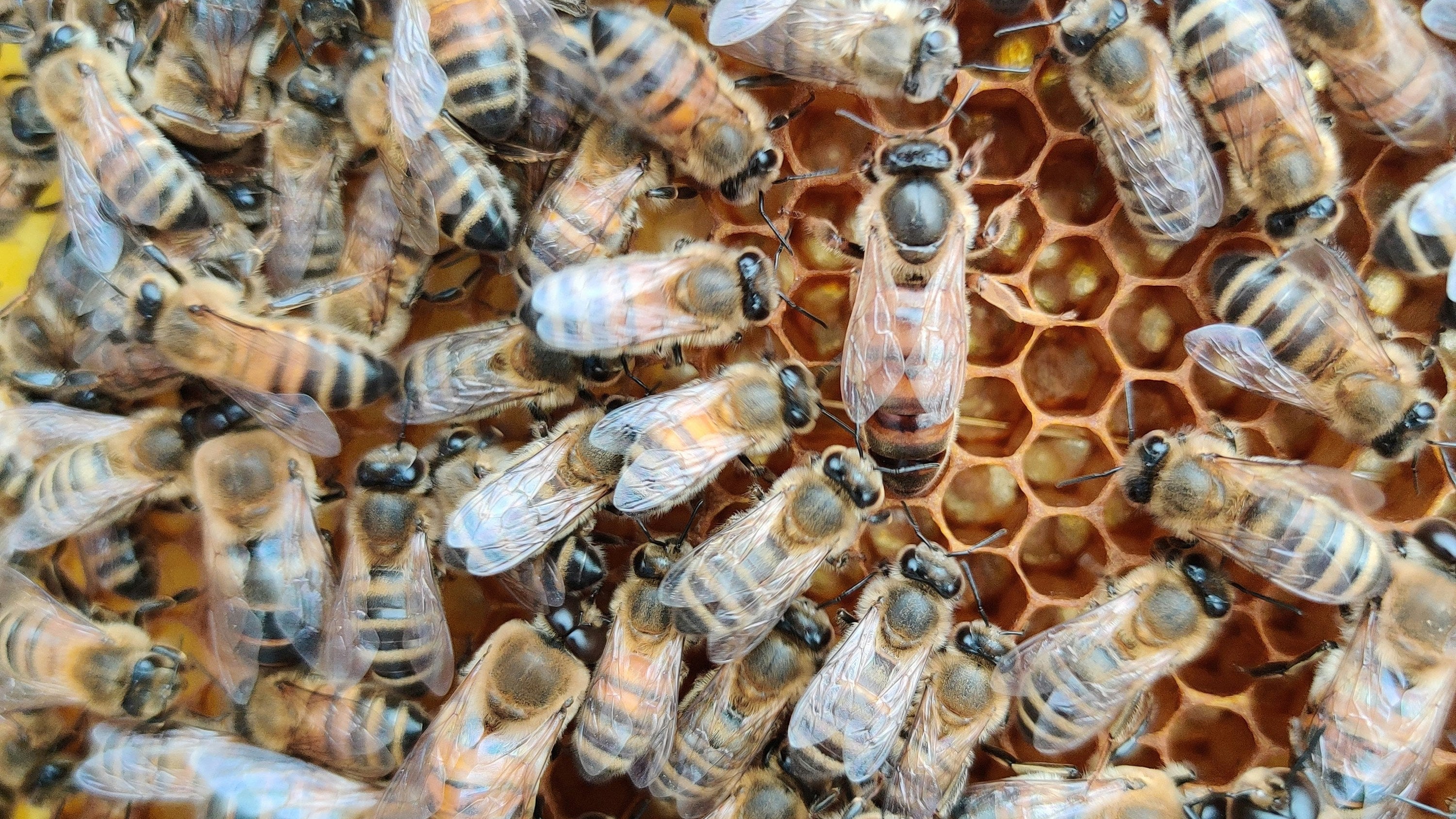
When the temperature outside falls to around 50 degrees Fahrenheit, the bees pull in close and form what is called the winter cluster. It’s a tight ball of bees with the queen near the center. The cluster stays in the hive all winter, shifting slowly across the comb as the bees reach new stores of honey.

How the Cluster Keeps Warm
Bees can’t leave the hive to find food or warmth in winter, so they make their own heat. They do it by shivering their flight muscles, essentially vibrating, which generates warmth without moving their wings. The bees on the inside of the cluster stay warmest, and the bees on the outer edge form an insulating layer that holds that heat in.
The bees also take turns. Workers on the cold outer edge move inward to warm up, and bees from the center move out to take their place. It’s constant teamwork, and it’s how the queen stays warm enough to survive until spring.
Honey as the Fuel
All that shivering takes energy, and the bees’ fuel is the honey they stored during the warmer months. That is the main reason beekeepers leave honey in the hive, only harvesting the surplus. In a cold climate like ours, a colony needs a lot of honey to make it through to spring, often 60-80 pounds or more.
This is also why the summer honey flow matters so much. The bees are not only making honey for us, but are actually building up the food supply the colony needs to survive winter.

Winter Bees Are Different
The worker bees you see in midsummer live about six weeks. The bees raised in late fall are built differently. These winter bees have more fat stores in their bodies and live for several months, which means they can keep the colony going until new bees are raised in spring.
A few other things change as the season shifts:
- The drones are gone. They are usually pushed out in fall, so the colony does not use up food on bees that are no longer needed.
- The queen slows down. She lays far fewer eggs in the cold months, and often stops laying for a while, then starts again in late winter.
- Bees may take cleansing flights. On a milder day, they will venture out briefly to relieve themselves, since they avoid doing so inside the hive.
What About Other Bees?
Not every bee handles winter the same way. In bumblebee colonies, only the new queens survive winter. They find a protected spot and go into true hibernation, while the rest of the colony dies off. Many solitary bees spend the winter in their nests, waiting to emerge in spring.
Honey bees are unusual because the whole colony makes it through together.
How Beekeepers Help
Here in Vermont, beekeepers get hives ready well before the first snow. That usually means making sure the colony has plenty of honey stored, protecting the hive from wind, keeping mice out, and making sure there is enough ventilation so moisture does not build up. After that, the bees do the rest, and the best thing a beekeeper can do is leave them alone.
Why It Matters
Getting through the cold is one of the most remarkable things bees do. Thousands of them, packed together, keeping each other and their queen alive through a Vermont winter. We’ve been keeping bees here since 1931, and it never stops impressing us.
Next time you add honey to your tea on a cold day, remember how hard the bees worked to store it. Thank you for being part of the CVA community, and don’t forget to check out Curtis in our reel for more on how bees handle the cold.