
DIY Beeswax Sunscreen
Store-bought sunscreen seems simple enough, but if you've ever flipped that bottle around and tried to read the ingredients list, you know it's anything but simple. A growing number of DIYers are skipping the mystery chemicals and making their own sunscreen at home using only a handful of natural ingredients. Beeswax sunscreen is one of the most popular versions, and for good reason.
Here's what you need to know, plus a simple recipe to make your own.

Why Make Your Own Sunscreen?
1. You Control What Goes On Your Skin
Most commercial sunscreens use chemical UV filters like avobenzone, oxybenzone, and octocrylene. A 2020 FDA study found that several of these ingredients are absorbed into the bloodstream, even after just one use. While the long-term health implications are still being studied, many people prefer to skip the uncertainty altogether.
DIY beeswax sunscreen relies on zinc oxide as its active ingredient, a physical (mineral) barrier that sits on top of the skin and reflects UV rays rather than absorbing them.
2. It's Reef-Safe
Chemical sunscreen ingredients, particularly oxybenzone and octinoxate, have been shown to damage coral reefs and marine ecosystems. Non-nano zinc oxide, the kind used in this recipe, has a particle size that is safe for marine life and won't wash off into the ocean and cause harm.
3. Beeswax Is a Genuinely Useful Ingredient
Beeswax does a lot of heavy lifting in this recipe beyond just holding things together. It:
- Waterproofs the formula- beeswax forms a barrier on skin that causes water to bead off, making this sunscreen reasonably resistant to sweat and swimming
- Adds texture- it gives the sunscreen a smooth, solid-but-spreadable consistency at room temperature
- Offers skin benefits- beeswax is high in vitamin A, has natural anti-inflammatory properties, and helps support skin cell regeneration
4. It's Cost-Effective
Once you have the base ingredients, a single batch can last an entire summer. Beeswax pellets, coconut oil, and shea butter are all relatively inexpensive in bulk, and a little zinc oxide goes a long way.
What You Need to Know Before You Start
On SPF: It's important to be honest here. Homemade sunscreen cannot be laboratory-tested for a certified SPF rating the way commercial products are. That said, the zinc oxide concentration in this recipe is estimated to provide roughly SPF 25–30, based on the known UV-blocking properties of zinc oxide and the natural SPF contributions of shea butter and coconut oil.
On zinc oxide: Always use non-nano zinc oxide (particle size over 100nm). Nano zinc oxide can penetrate the skin and is harmful to marine life. Also important: wear a dust mask when measuring and mixing it, as you don't want to inhale the powder.
On shelf life: This sunscreen stores well for up to one year in a cool, dry place away from direct heat and sunlight. A glass jar works best for storage.
DIY Beeswax Sunscreen Recipe
Estimated SPF: ~25–30
Makes: approximately 4 oz
Time: about 20–30 minutes
Ingredients
- 1 oz solid beeswax block, grated or broken into small chunks
- ¼ cup coconut oil
- 2 tablespoons shea butter
- 2 tablespoons non-nano zinc oxide powder (wear a mask when handling)
- 1 teaspoon jojoba or almond oil (optional- adds slip and skin benefits)
- 10–15 drops essential oil (optional- lavender and carrot seed are popular choices)
Equipment
- Double boiler (or a heat-safe bowl set over a saucepan)
- Kitchen scale or measuring spoons
- Knife or cheese grater
- Silicone spatula
- Dust mask
- Glass jar or small tin for storage
Instructions
Step 1: Set up a double boiler. Fill a saucepan with a few inches of water and bring it to a gentle simmer. Place a heat-safe glass bowl on top, making sure it doesn't touch the water.
Step 2: Melt the base ingredients. Add the beeswax, coconut oil, and shea butter to the bowl. If your beeswax block is still in one piece, grate it with a cheese grater or use a knife to break it into smaller chunks first, as this helps it melt evenly and much faster. Stir occasionally until everything is fully melted and combined. This usually takes 5–10 minutes.
Step 3: Remove from heat. Take the bowl off the heat and let it cool slightly, as you want it liquid but not scalding. Give it about 5 minutes.
Step 4: Add the zinc oxide. Put on your dust mask. Slowly stir in the non-nano zinc oxide powder, mixing thoroughly until no clumps remain. This is the step that gives your sunscreen its UV protection, so take your time here.
Step 5: Add extras (optional). Stir in jojoba or almond oil if using, and add essential oils if desired. Carrot seed oil is a popular addition for a modest SPF boost, while lavender adds a pleasant scent and skin-soothing properties.
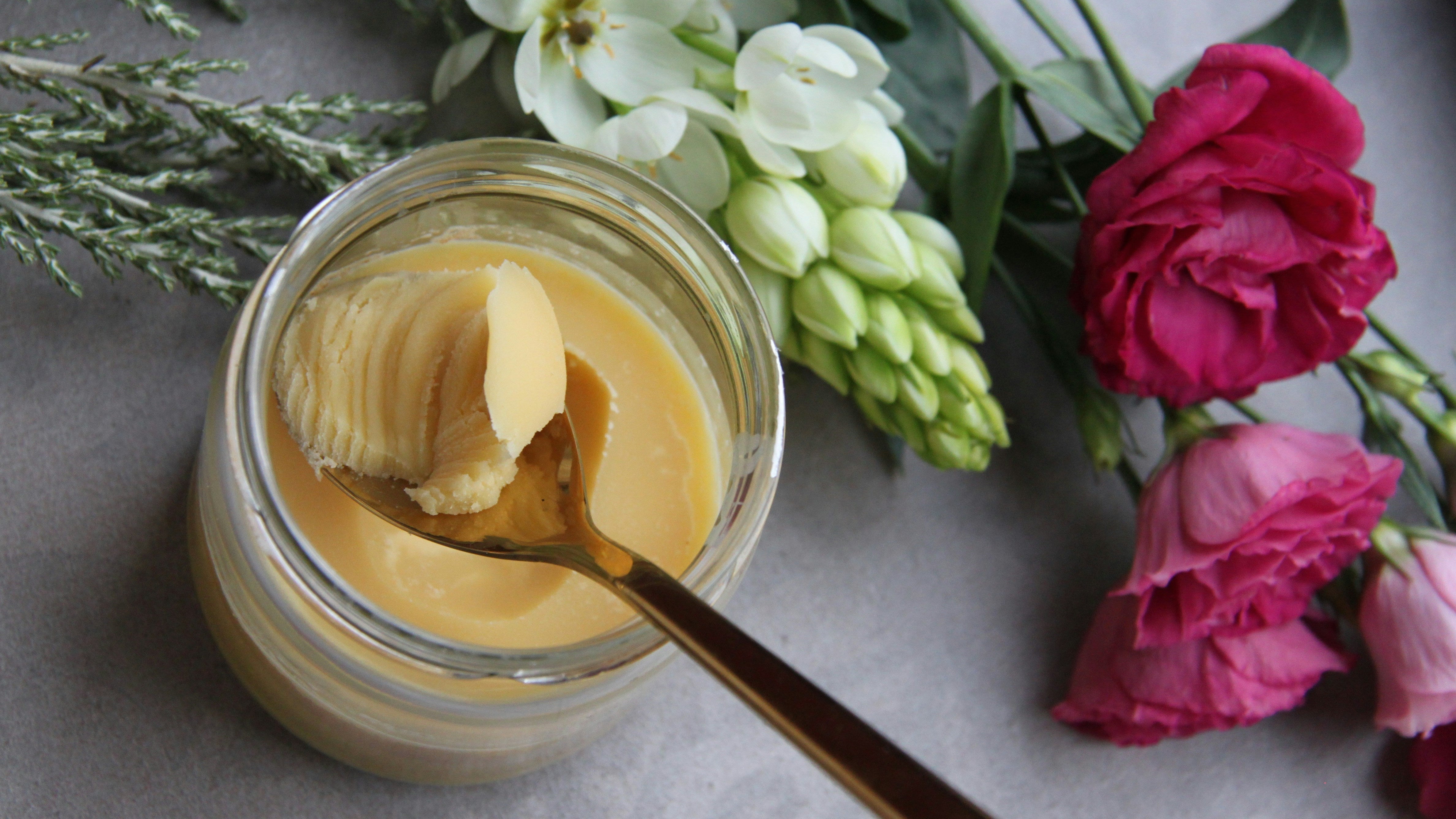
Step 6: Pour and cool. Pour the mixture into your glass jar or tin. Let it sit undisturbed at room temperature until fully set, usually 1–2 hours. Don't put it in the fridge to speed this up, as it can cause the mixture to separate.
Step 7: Label and store. Label with the date made and store in a cool, dry place. Use within 12 months.
Tips for Use
- Apply generously- sunscreen only works if you use enough of it. A thin smear won't give you the protection the recipe is capable of providing.
- Reapply every 2 hours, or after swimming, sweating heavily, or toweling off.
- Expect some white cast- zinc oxide doesn't disappear into skin the way chemical sunscreens do. It fades as it absorbs, but some white cast is normal, especially on darker skin tones. You can reduce this slightly by decreasing zinc oxide, but doing so also reduces protection.
- Adjust the texture to your preference- add more beeswax for a firmer balm-like product, or reduce it slightly for a creamier texture.

Final Thoughts
Making your own beeswax sunscreen isn't complicated, and it puts you in control of exactly what you're putting on your skin. The ingredients are simple, the process is straightforward, and the result is a waterproof, skin-nourishing formula that does what sunscreen is supposed to do.