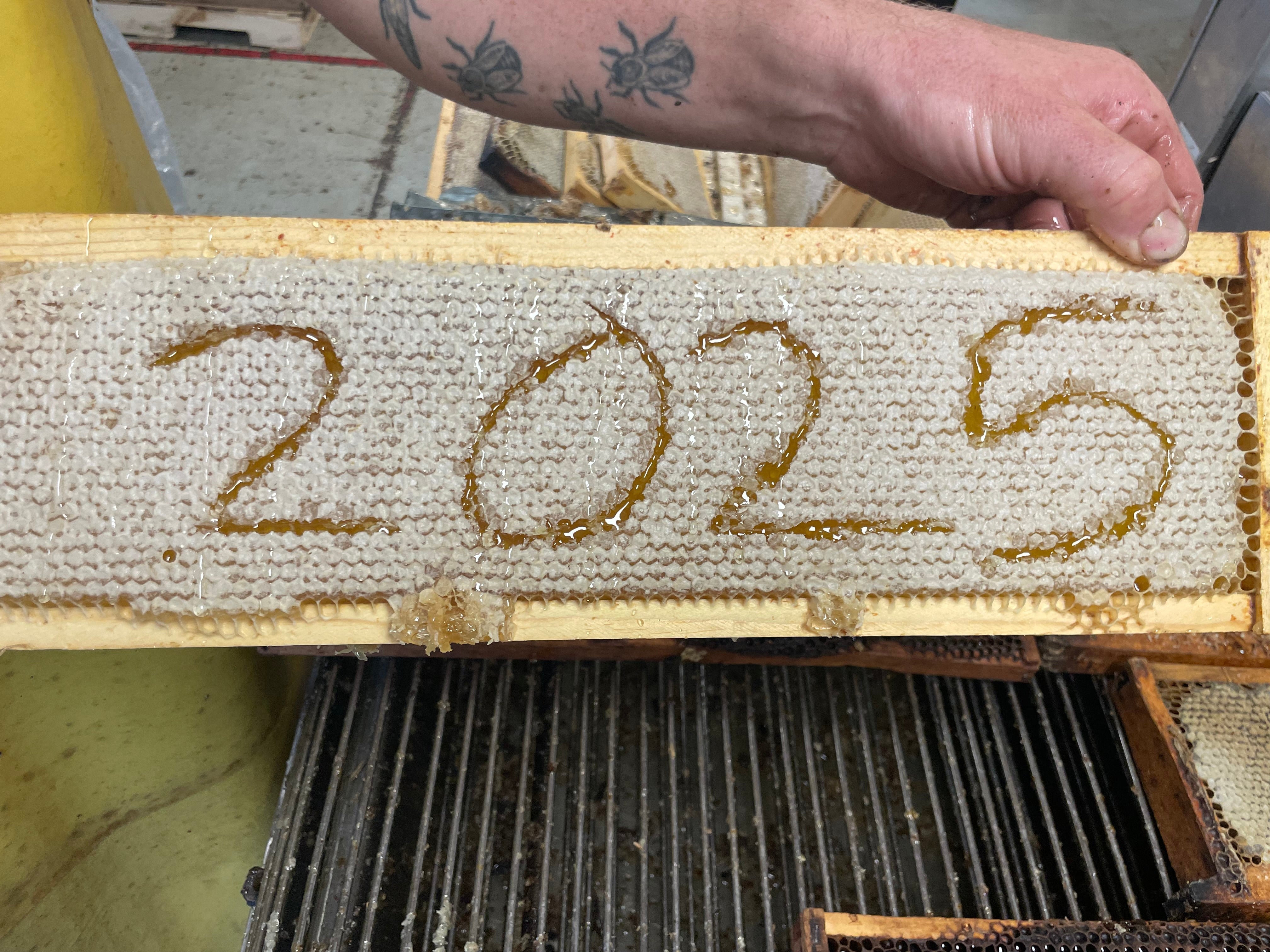
A Look Back at 2025 Harvest
Last August, we walked you through our honey extraction process from start to finish, the full journey from flower to bee to hive to jar. A year later, we're back in the thick of extraction season again, and it felt like a good time to look back at how that process unfolded in 2025.

What Extraction Season Actually Looks Like
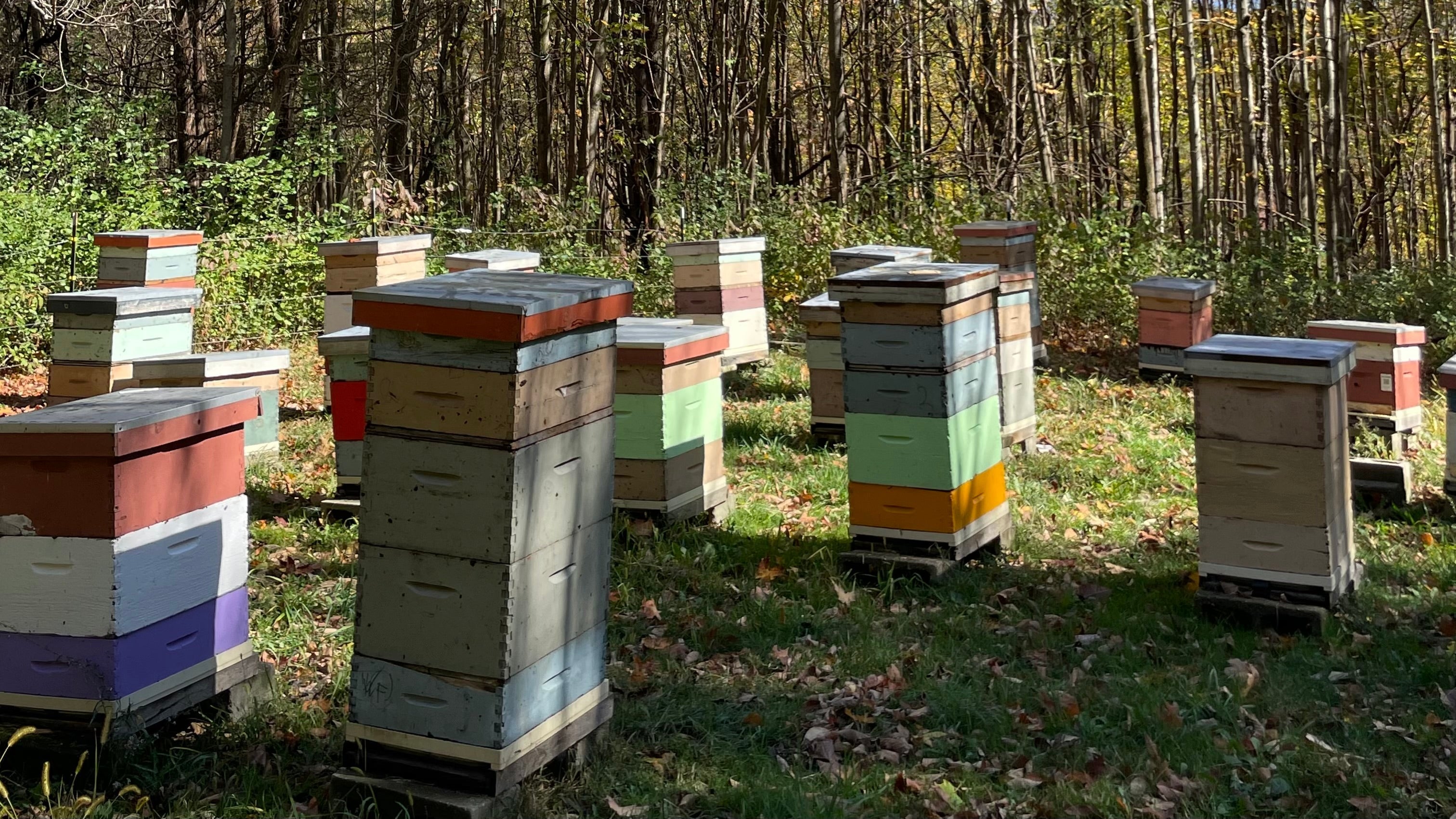
Our bees spend all spring and summer collecting nectar, passing it between worker bees, fanning it to reduce moisture, and capping it with beeswax once it's ready. By the time August rolls around, that work shows up in the supers, the top boxes of the hive where we take honey from, always leaving the bees enough to get through a Vermont winter.
From there, it's frames out of the hive, bees gently cleared with a fume board, and a trip back to the shop for uncapping. We run our operation through a comb decapping machine rather than hand tools, given our scale, and the wax we remove gets saved and reused rather than wasted.
Once uncapped, frames go into our extractors, which spin the honey out using centrifugal force. From there, our raw honey gets strained to remove debris, while our liquid honey goes through an additional heating and filtering step to reach that clear, smooth texture. Everything then gets settled into barrels before it's bottled into the jars you'd recognize on our shelves.

Why We're Sharing This Again
Extraction is one of those parts of the process that's easy to take for granted once the honey is sitting in your kitchen. Looking back at 2025 is a reminder of how much groundwork goes into every jar, and how much of it depends on the bees doing their part first. As we move through this year's harvest, that hasn't changed. It's still part science, part art, and a whole lot of respect for the colony that makes it possible.