
Honeybee Cleansing Flights
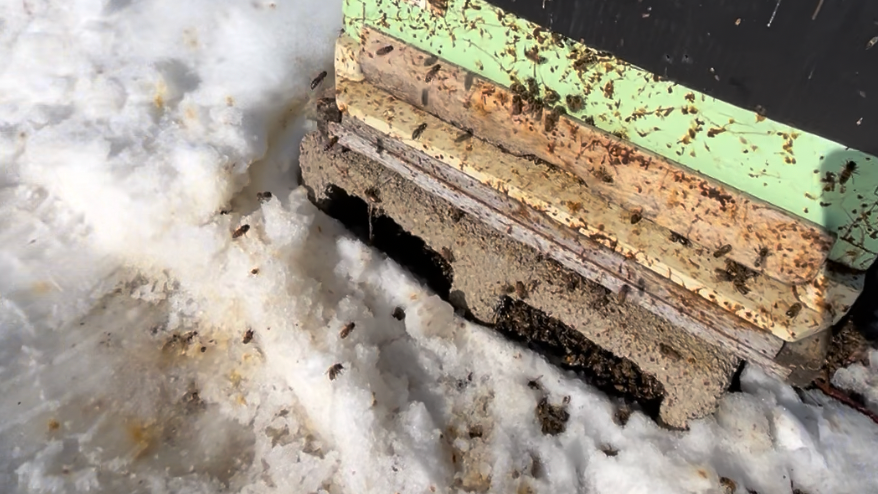
Have you ever walked past your beehive on a winter day and noticed small brown or yellowish spots scattered across the snow? These spots are the result of cleansing flights, a natural and essential behavior that helps honeybees stay healthy through the long winter months.
Life Inside the Hive During Winter
Unlike many insects, honeybees do not hibernate. Instead, they form a winter cluster inside the hive, gathering tightly around their queen. During this time, bees live entirely off stored honey and pollen. They rarely leave the hive, sometimes remaining inside for weeks or even months. This creates a unique challenge: bees cannot defecate inside the hive.
Why? Honeybees are exceptionally hygienic insects. Keeping the hive clean is essential for colony health, disease prevention, and survival. So how do they manage not going to the bathroom for months on end? This is where cleansing flights come in.
What Is a Cleansing Flight?
A cleansing flight is a brief trip outside the hive that bees take during winter or early spring to relieve themselves. In simple terms, it’s a bathroom break.
Bees will only take cleansing flights when weather conditions allow it. Typically, temperatures must rise to around 45–50°F (7–10°C) with little wind and some sunlight. On these unusually warm winter day, you may see busy bees flying outside the hive. These flights are short and purposeful. The bees exit the hive, defecate while in flight, and return as quickly as possible to conserve energy and avoid chilling.

Why Cleansing Flights Are So Important
Cleansing flights are critical for several reasons:
1. Hive Sanitation
Bees refuse to soil their hive. Holding waste for extended periods is stressful and physically demanding, but it prevents contamination of combs, honey stores, and brood areas.
2. Disease Prevention
Defecating inside the hive can spread pathogens such as Nosema, a gut parasite that weakens bees and can contribute to colony collapse. Cleansing flights significantly reduce this risk.
3. Colony Survival
If bees are unable to take cleansing flights for too long—due to extended cold spells or poor hive conditions—their digestive systems can become overburdened. This can lead to dysentery, weakened bees, and even colony loss.
What You Might Notice
On cleansing flight days, the area around a hive may show small yellow or brown spots on snow, hive fronts, or nearby surfaces. While this can be alarming at first, it’s usually a sign of healthy bees taking advantage of good weather.
Cleansing flights may look like a minor event, but they are a crucial part of a honeybee colony’s winter survival strategy. These brief moments in the air help keep the hive clean, and the bees healthy.