

Bumblebees vs Honeybees: What's the Difference?
While both honeybees and bumblebees buzz through gardens, collect nectar and pollen, and play essential roles in pollinating plants, they are actually different species! These two types of bees are quite different in appearance, behavior, and the way they live.
How are they different?
1. Appearance
One of the easiest ways to tell bumblebees and honeybees apart is by their physical appearance.
Bumblebees are generally larger and rounder than honeybees. Their bodies are thick and fuzzy, covered with dense hairs that help them collect pollen efficiently. Honeybees, on the other hand, are smaller and more slender. They have a more streamlined body and less visible fuzz compared to bumblebees.

2. Species Diversity and Native Bees
Another key difference between bumblebees and honeybees is the diversity of species they represent. Bumblebees are part of a larger group of native bees and include many different species within the genus Bombus. In North America alone, there are dozens of bumblebee species, each with unique color patterns and behaviors!
Honeybees, by contrast, are represented by a single domesticated species used in agriculture worldwide, Apis mellifera. While honeybees are incredibly important pollinators, they are not native to North America and represent only one small piece of the much larger and more diverse native bee landscape.
3. Social Structure and Colonies
Both bumblebees and honeybees are social insects, but the size and structure of their colonies differ significantly.
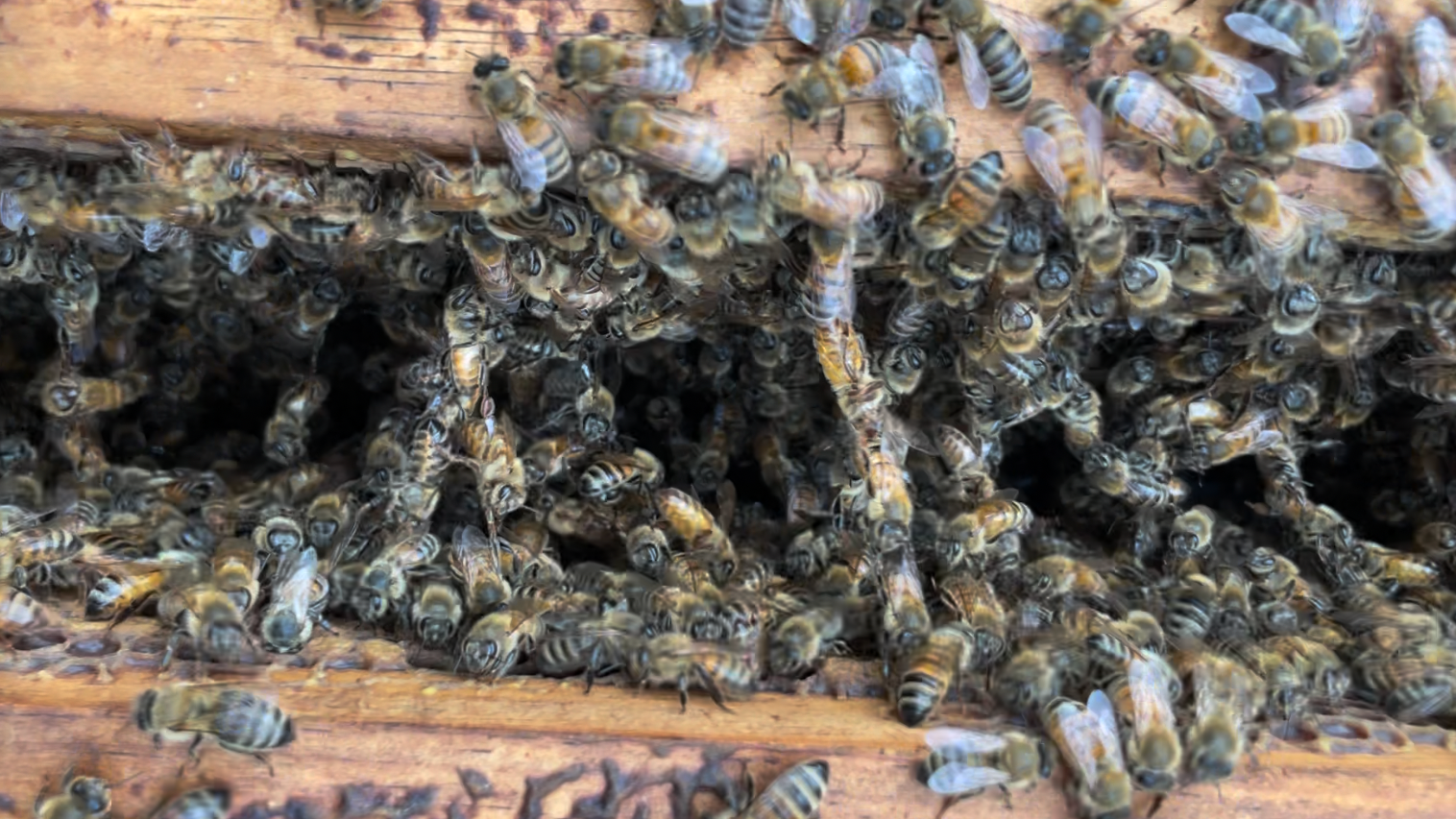
Honeybees live in very large colonies that can contain tens of thousands of individuals (right photo below). The colony is highly organized, with workers performing specialized tasks such as nursing larvae, building wax combs, guarding the hive, and foraging for food.
Bumblebee colonies are much smaller (left photo below). A typical colony might contain only 50 to a few hundred bees. Like honeybees, they have a queen and female workers, but their social organization is simpler.

4. Honey Production
One of the biggest practical differences between these bees is honey production.
Honeybees produce large quantities of honey and store it in their combs to feed the colony through winter. This surplus honey is what beekeepers harvest and sell!
Bumblebees also make a honey-like nectar store, but only in small amounts—just enough to feed their colony. Because their colonies are small and short-lived, they do not produce excess honey suitable for harvesting.

5. Pollination Abilities
Both bumblebees and honeybees are important pollinators, but they excel in different ways.
Bumblebees are particularly effective pollinators because of their size and their ability to perform “buzz pollination.” By vibrating their bodies, they can release pollen from certain flowers that honeybees cannot easily access. This makes them especially valuable for crops like tomatoes, blueberries, and peppers.
Honeybees are extremely efficient pollinators as well, especially because their large colonies send thousands of workers out to forage. Their numbers make them vital to the pollination of many agricultural crops worldwide.
While they may look similar at a glance, bumblebees and honeybees have distinct lifestyles, abilities, and ecological roles. Together, they form an important part of the natural world buzzing quietly behind the scenes to keep plants—and our food systems—thriving!