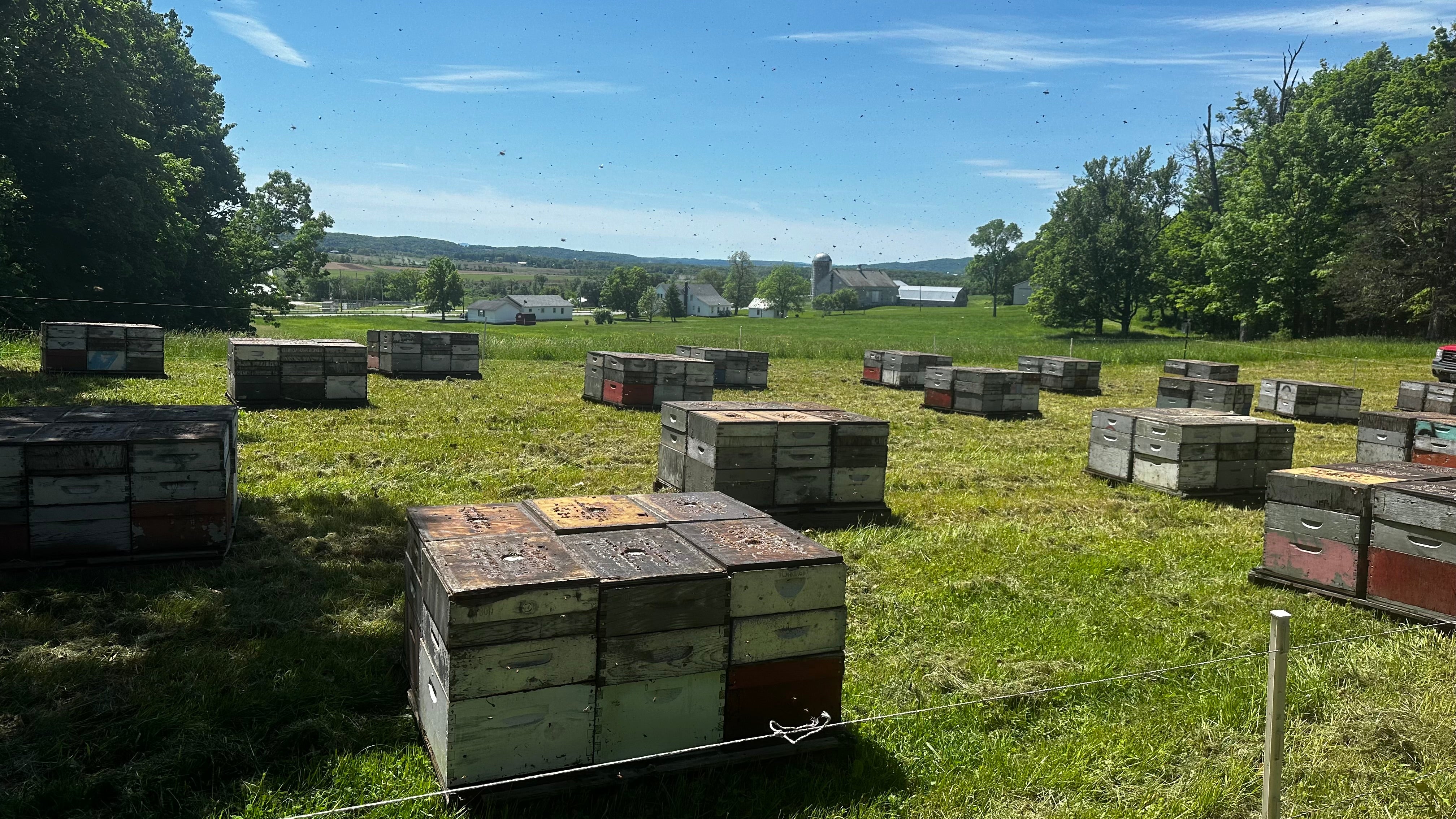
What Are the Bees Doing in July?
That nectar gets passed between bees, broken down with enzymes, and fanned with their wings to reduce moisture until it's thick enough to cap with wax. What you end up with is honey, and in July, the bees are making a lot of it.

The Queen Is at Peak Production
A healthy queen can lay up to 1,500 to 2,000 eggs a day during peak summer. She's been at it since spring, and by July, the colony population is at or near its annual high, often 50,000 to 80,000 bees in a thriving hive. That population is what makes the honey flow possible. There are simply more workers to forage, more house bees to process nectar, and more bees to keep the colony fed.
Keeping Cool
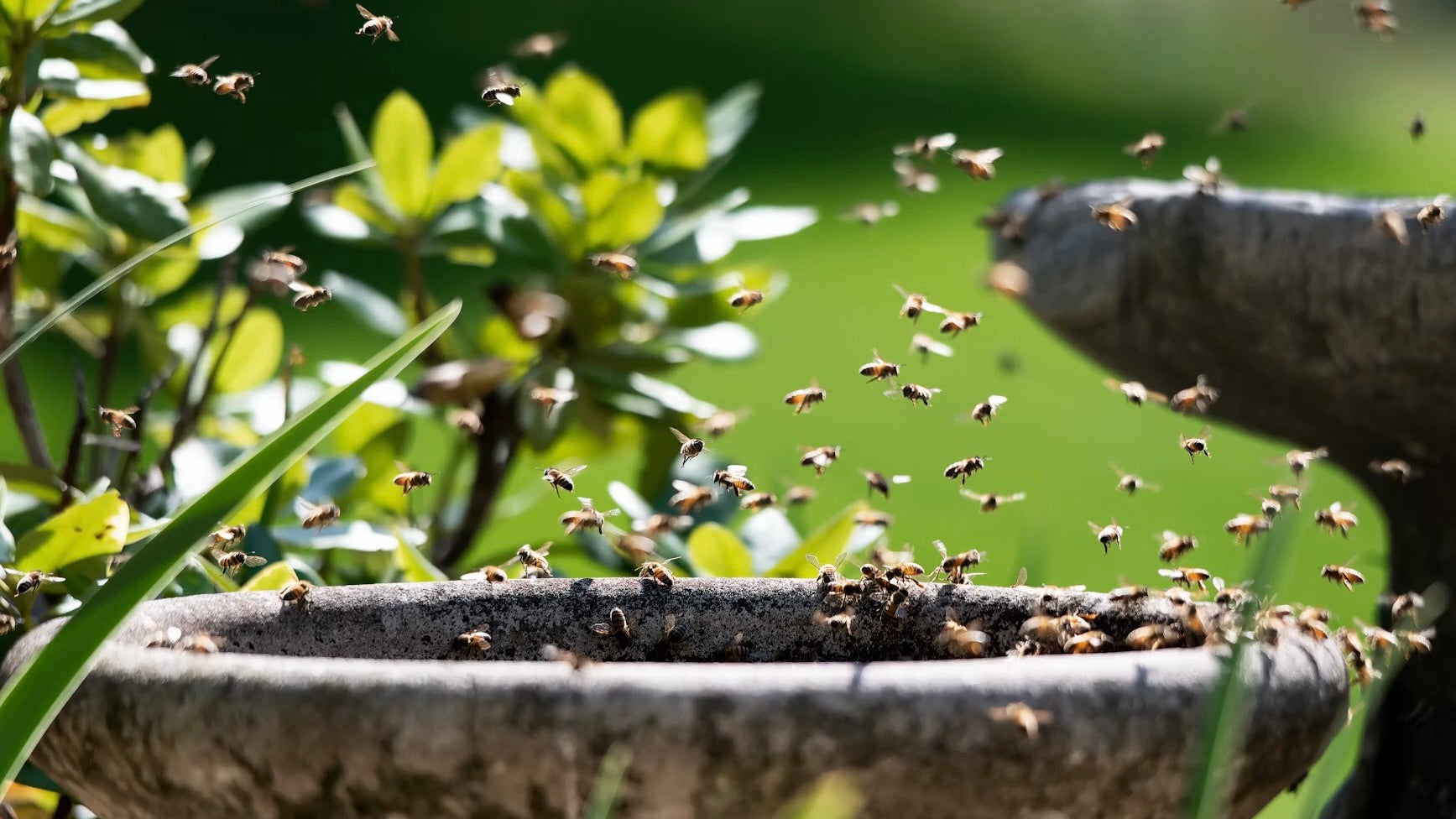
Heat management in July is a real task for a hive. Bees regulate the internal temperature of their brood nest with remarkable precision, aiming for around 95° Fahrenheit year-round. On a hot Vermont afternoon, that means thousands of bees fanning at the hive entrance to move air through, and others collecting water to evaporate inside for cooling. If you see bees clustering outside the hive on a hot day, they're not in trouble; they're making room inside and staying out of the way.

Swarming Season Is Winding Down
Earlier in the season, crowded hives might have sent out swarms as a way of reproducing. By July, that impulse is mostly behind us. The colony's energy is now focused on building up honey stores for winter, not splitting apart. That single-mindedness makes July bees busy in the best possible way.
What This Means for Our Honey
When you open a jar of CVA summer honey, you're tasting the result of all of that July work. The light color and floral sweetness that define our summer harvest come directly from what's blooming in our Vermont fields right now. The bees are the ones doing the foraging, but we like to think the land has something to say about it too.